


What you'll learn in this article
- What youtube trueview ads really are — a billing model, not a single placement
- The three variants I actually run: in-stream, discovery/in-feed, and TrueView for action
- The specs that matter per variant — length, where it serves, what counts as a view
- How the cost works and what "paying only for qualified views" changes in practice
- A clean setup path and the funnel stages where TrueView genuinely earns its spend
Ask ten advertisers what youtube trueview ads are and you'll get ten slightly different answers — because TrueView started as a family of formats, got quietly absorbed into Google's newer campaign types, and then, in late 2025, resurfaced by name on the metrics you report on. So before anything else, the definition needs cleaning up. TrueView isn't one ad. It's a pricing philosophy: you pay for attention that was actually earned, not for every impression served.
This is the end-to-end version, written from the accounts I run rather than from a glossary. I'll define the model, walk the variants, cover the specs and the cost, show a clean setup path, and finish with the part that decides whether TrueView is worth it: knowing which funnel job it's built for. My aim is that by the end you can answer what are trueview ads on youtube in one sentence and know exactly where to deploy them.
What are TrueView ads on YouTube?
TrueView ads on YouTube are the view-based formats where you're charged only when a viewer watches a qualifying amount of your video or interacts with it — not merely when the ad is shown. On skippable in-stream, the anchor of the whole system, a paid view is counted when someone watches 30 seconds, the full ad if it's shorter than 30 seconds, or takes an action — whichever happens first. Skip before that threshold and it costs you nothing.
The inference that follows is the entire point. Because skips are free, the audience filters itself: the people you pay for are, by definition, the ones who chose not to leave. That turns spend into a rough attention signal — a self-selected view is worth more than a forced impression, and the billing model bakes that filter in for you. It's why I treat TrueView view rate as a creative-quality readout, not just a reach stat.
One naming note that trips up anyone auditing an older account: TrueView the term faded from the interface for a while as the formats moved into Video view and Demand Gen campaigns. Then in October 2025 Google renamed the reporting "Views" metric to "TrueView views." Per Google's official documentation on video ad formats, the rename didn't change how you're billed or how paid views are counted — it just put the label back on the column you already watch.
The variants: in-stream, discovery, and TrueView for action
TrueView is a model with three faces. Each answers a different question, and the mistake I see most is running one when the goal calls for another.
TrueView in-stream (skippable)
This is the default and the one people mean when they say youtube trueview ads. Your video plays before, during, or after other content, and after 5 seconds the viewer can skip. You pay on the qualified-view rule above. It's the honest reach format — broad exposure that only bills when someone stays. If you want the placement-level detail on this specific format, I go deeper in the guide to how skippable YouTube ads work.
TrueView discovery (now in-feed)
Discovery ads — today's in-feed video ads — are a thumbnail plus text in places of discovery: YouTube Search, the homefeed, and next to related videos. They don't interrupt; they wait to be clicked, and you're billed on the click to watch. Same view-driven spirit, opposite moment of contact. The full split between this and in-stream is worth understanding before you budget, and I've laid it out in in-stream vs in-feed YouTube ads.
TrueView for action
This is the conversion-oriented layer: skippable in-stream with call-to-action overlays and headlines built to drive clicks and conversions, not just views. It keeps the pay-per-view economics but adds an action goal on top, which is why I reach for it when the brief is leads or sales rather than pure awareness. The dedicated walkthrough lives in my piece on TrueView for action ads.
Specs that actually matter per variant
You don't need to memorise a spec sheet, but a few numbers change how you brief creative, so these are the ones I keep in my head.
Length. Skippable in-stream has no hard maximum, though under three minutes is the practical recommendation — and because the first 5 seconds are unskippable, that's where the whole message has to hook. Discovery/in-feed has no max length either, since the viewer opted in by clicking. TrueView for action inherits the in-stream length rules.
Where each serves. In-stream serves on YouTube watch pages and, if you opt in, across Google video partners. In-feed serves on YouTube Search and the mobile homefeed. That placement difference is the real spec — it dictates viewer mindset far more than any pixel dimension.
What counts as a billable view. In-stream: 30 seconds, full ad if shorter, or an interaction. In-feed: the click to watch (or, in some cases, a 10-second autoplay). Both increment the TrueView view count and both let you remarket to viewers afterward — which, honestly, is half the reason I value the format: every paid view becomes a retargetable audience.
What TrueView costs — and what "qualified views" really buys you
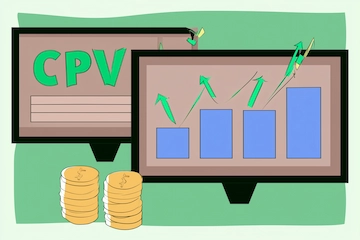
TrueView bills on CPV, cost-per-view. There's no fixed rate: it's an auction, so your actual CPV moves with targeting, competition, audience, and creative quality. Chasing a "average CPV" number in the abstract is a trap — the figure only means something inside your own account, benchmarked against your own historical CPV and the levers that actually move it.
Here's the part that matters more than the headline number. Because you only pay for qualified views, every skip is free budget protection. If your first 5 seconds are weak, viewers leave before the 30-second bill triggers, and you've spent nothing on them. That inverts the usual creative risk: a mediocre hook doesn't drain budget, it just fails to accumulate views. The cost of a bad ad shows up as low view rate, not wasted spend — which makes CPV campaigns unusually forgiving to test in.
The flip side, and the thing I remind clients of constantly: a low CPV is not automatically good. Cheap views from a poorly-targeted, broad audience can cost less per view and deliver less per dollar than pricier, well-qualified ones. I judge TrueView on view rate and downstream behaviour together, never CPV alone — the same discipline I apply to any video bidding decision, where the cheapest unit rarely wins the account.
Setting up a TrueView campaign end to end
The setup is less about clicks and more about matching the variant to the goal before you touch the interface. This is the sequence I follow.
Start from the objective, not the format. Awareness and consideration goals (now labelled "YouTube reach, views, and engagements") point you to skippable in-stream and in-feed. Leads or sales point you to TrueView for action inside a conversion-goal campaign. Pick the job first; the format falls out of it.
Host the video on YouTube and set CPV bidding. Your creative has to live on YouTube to serve. For classic TrueView economics you want CPV bidding so you're paying per qualified view — if you switch to Target CPM or conversion bidding, you've left the pay-per-view model and moved to impression- or action-based billing.
Build the audience, then let the view filter do its work. Layer your targeting, but don't over-constrain top-of-funnel in-stream — the skip mechanism is itself a filter, so broad-but-relevant plus a strong hook often beats narrow-and-safe. For the full menu of formats you can combine around TrueView, the catalogue of YouTube ad formats is the pillar I'd keep open while you build.
Instrument for the metric you'll be judged on. Set the campaign up so view rate, CPV, and downstream conversions are all visible from day one. TrueView's whole advantage is that it separates "who stayed" from "who was merely shown" — if your reporting doesn't surface that, you've thrown away the signal you paid for.
Where the pay-per-view model actually wins
TrueView isn't universally the right tool — it wins in specific spots, and knowing them is the difference between a format that works and a line item you eventually pause.
Top-of-funnel reach where attention is the goal. This is TrueView's home ground. When the job is getting a message in front of a broad audience and learning who cares, skippable in-stream is close to ideal: you pay only for the self-selected watchers, so your spend concentrates on genuine interest instead of raw exposure.
Creative testing on a budget. Because weak hooks fail cheaply, TrueView is where I test new video angles. View rate tells you within days which creative earns attention, and you haven't burned budget proving the losers wrong.
Building remarketing pools. Every qualified view is a retargetable viewer. I've run in-stream almost as an audience-building engine — the views matter, but the remarketing list they create is often the more durable asset, feeding lower-funnel campaigns later.
Where it wins less: if you need guaranteed full-message delivery, non-skippable or bumpers on CPM fit better; and if you're chasing immediate conversions from a warm audience, TrueView for action or a Demand Gen setup will usually outpace plain in-stream. The takeaway I'd leave you with: treat youtube trueview ads as a precision instrument for earned attention, grade them on view rate and downstream lift rather than CPV in isolation, and let the free-skip mechanism do the audience filtering it was designed to do.
FAQ: YouTube TrueView ads
What are TrueView ads on YouTube?
How much do YouTube TrueView ads cost?
Is TrueView the same as skippable in-stream ads?
Did Google rename TrueView?
All articles
See all →Related articles
 Campaigns
YouTube Ad Formats: Pre-Roll, Mid-Roll, Post-Roll Decoded
Pre-roll, mid-roll, post-roll and overlay on YouTube: where the ad lands, how attention and completion shift, and when I pick skippable vs non-skippable.
 Campaigns
YouTube Masthead Ads: Homepage Reach, Specs, Cost & Booking
YouTube masthead ads explained end to end: where the unit runs, specs, youtube masthead ad cost and booking, and why I treat it as reach brand, not performance.
 Campaigns
YouTube Skippable Ads vs Non-Skippable: When to Use Each
YouTube skippable ads vs non skippable youtube ads by a practitioner: length, specs, cost, view rate and message control, plus how to build both.
 Campaigns
Did YouTube Remove Skippable Ads? What Actually Changed
Did YouTube remove skippable ads? A practitioner explains why some ads aren
 Campaigns
History of YouTube Ad Formats: How the Rules Shifted
The history of YouTube ad formats read for inference: why skippable, non-skippable and ad lengths changed, and what the YouTube ad formats evolution means today.
 Campaigns
In-Stream vs In-Feed YouTube Ads: Where, Cost, Funnel
In-stream ads youtube vs video discovery: where each serves, how you pay, and why confusing them wastes budget how I split them by funnel.