


What you'll learn in this article
- The one difference that defines in stream vs in feed youtube ads: interruption versus discovery
- Exactly where each format serves — watch pages versus Search, homefeed, and related videos
- How you're billed on each — CPV/CPM watch time versus a click into the video — and why that changes your reporting
- Why confusing the two is a reliable way to waste budget, and the specific mistake I see most
- How I separate in-stream ads youtube vs video discovery by funnel stage so each one is graded on the right KPI
If I had to name the single most common way I see YouTube budget quietly bleed out, it's advertisers treating in stream vs in feed youtube ads as two flavours of the same thing. They're not. One interrupts the video you came to watch; the other sits in a feed and waits for you to choose it. That difference isn't cosmetic — it decides where the ad appears, how you pay, and, most importantly, which stage of the funnel it belongs to.
This is the practitioner version, built from the accounts I actually run. I'll define the split cleanly, map where each serves, walk through the billing model on each side, and then get to the part that matters: how I separate the two by funnel phase so I never grade a discovery format on an interruption metric. That mismatch is where the wasted spend lives, and it's entirely avoidable.
The core split: interruption vs discovery
Start with the mental model, because everything else follows from it. In-stream ads play before, during, or after the video a viewer is already watching — they interrupt. In-feed ads, which Google used to call video discovery ads, show up as a thumbnail plus text in places of discovery, and they only play when someone clicks. So the whole comparison of in-stream ads youtube vs video discovery comes down to a single verb: in-stream pushes, in-feed invites.
That naming history trips people up, so it's worth saying plainly: "video discovery" and "in-feed" are the same format — Google renamed it, and the old term still floats around in dashboards and blog posts. If you want the wider map of where both sit alongside bumpers, non-skippable, and Shorts, my catalogue of YouTube ad formats is the pillar I'd read first; this article is the deep dive on just these two.
The consequence of the interruption-vs-discovery split is that the viewer's mindset is completely different at the moment of contact. On in-stream, they didn't ask for your ad — you're borrowing attention from something else. On in-feed, they're browsing or searching, and clicking your thumbnail is a small act of intent. Two different psychological states means two different jobs, and that's the seed of the whole funnel argument later on.
Where each format actually serves
Placement is the first thing that separates them, and it's the cleanest to verify. In-stream ads serve on YouTube watch pages — inside the video experience — and across websites and apps on Google video partners when you opt in. In-feed ads serve where people go to find things: YouTube Search results, the YouTube mobile homefeed, and alongside related videos. Google's own about video ad formats page is the reference I keep open when I want the current, authoritative "where it serves" line for each.
The inference I draw from placement is the useful bit. In-stream surfaces are consumption surfaces — the person is watching, not deciding, so you have to earn the interruption. In-feed surfaces are decision surfaces — the person is scanning options, so you have to win a comparison against organic thumbnails and other ads. Same YouTube, opposite moment. When I brief creative, that distinction alone changes the thumbnail, the hook, and the first line of copy.
One practical note from the accounts I run: because in-feed lives in Search and the homefeed, its performance tracks much more closely with query and browsing intent than in-stream does. When in-feed underperforms, I look at the topic and audience relevance first; when in-stream underperforms, I look at the opening seconds and targeting breadth first. Different surface, different first suspect.
How you pay: watch time vs a click into the video
This is where confusing the two gets expensive, because they bill on genuinely different events. Get this wrong and every report reads like the wrong campaign is failing.
In-stream billing
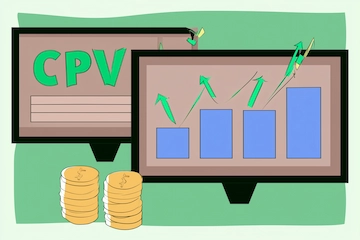
Skippable in-stream runs on CPV (cost-per-view) by default: you pay when a viewer watches 30 seconds of your ad, or the full ad if it's shorter than 30 seconds, or interacts — whichever comes first. Non-skippable in-stream and bumpers instead use Target CPM, so you pay per thousand impressions. Either way, you're paying for attention already spent inside the video. If you want the full breakdown of the CPV-versus-CPM mechanics on the interruption side, I go deep on it in the guide to how in-stream ads are billed and specced.
In-feed billing
In-feed video ads charge on a click: you're billed when someone clicks the thumbnail to watch your video, or in some cases when it autoplays for at least 10 seconds. That's a fundamentally different unit — you're paying for the decision to watch, not for watch time itself. So a low in-feed cost-per-click-to-watch can sit next to a perfectly healthy in-stream CPV, and neither number tells you anything about the other. The one rule I'd tattoo on every media plan: never compare an in-feed cost to an in-stream cost as if they measure the same thing. They don't — one prices a click, the other prices watch time.
Why confusing them wastes budget
Here's the concrete failure mode I see over and over. Someone runs in-stream and in-feed in the same campaign or with the same success metric, sees that in-feed has a lower cost per view or a higher click rate, and shifts budget toward it — or does the reverse and kills in-feed for having "worse reach." Both moves are reasoning from a comparison that was never valid, because the two formats are billed on different events and serve at different funnel moments.
The trap is that the numbers look comparable in a dashboard. Views, clicks, and CPV columns line up side by side, so it feels fair to rank them against each other. It isn't. An in-feed "view" started with a deliberate click; an in-stream "view" started with an interruption the viewer tolerated. Ranking them together is like comparing a shop's foot traffic to its email open rate and declaring one channel the loser. This is the same category error I warn about with frequency capping across Demand Gen and video campaigns, where mixing formats under one number hides what each is really doing.
The waste isn't just misallocated budget — it's the good format you switched off because it lost a race it was never in. I've inherited accounts where in-feed had been paused for months because it "didn't perform," when in reality it had been quietly doing mid-funnel work that in-stream couldn't, and no one had graded it on its own job.
How I split in-stream and in-feed by funnel stage
This is the framework I actually use, and it resolves the whole confusion by refusing to let the two formats share a KPI. I assign each one to a funnel phase and judge it only on the question that phase asks.
In-stream → top of funnel
I lean on in-stream when the job is reach and attention — getting a message in front of a broad, often unaware audience and seeing who chooses to keep watching. The skippable variant is especially honest here, because paid views are self-selected attention, which is exactly the signal you want at the top. I grade it on view rate, cost per view, and downstream lift — not on clicks. If you're building the top-of-funnel structure around this, the way you structure campaigns for Google's AI in 2026 matters more than it used to, because signal quality upstream feeds everything below.
In-feed → mid funnel
I use in-feed for the moment of active interest — the viewer is searching or browsing and picks your thumbnail on purpose. That deliberate click is a mid-funnel intent signal, so I judge in-feed on click-through into the video, watch-through once they're in, and the actions that follow. It's the format that catches people already leaning toward the category, which is why I never ask it to deliver top-of-funnel reach numbers.
The rule that ties it together
Each format gets its own scoreboard. In-stream is measured on earned attention; in-feed is measured on chosen engagement. The second I let them compete on one shared number, I've reintroduced the exact mistake this whole article is about. Separating them by funnel phase isn't a nicety — it's what stops the budget leak at the source.
Best practices for running both together
Running in-stream and in-feed side by side works well — as long as you keep their jobs and their scoreboards separate. Here's what consistently holds up across the accounts I run.
Give each format its own KPI before launch. Decide up front that in-stream is graded on view rate and downstream lift, and in-feed on click-to-watch and post-click action. Writing it down before the data arrives is what stops the mid-flight "but in-feed's CPV is lower" reflex.
Brief creative to the moment, not the format. In-stream creative has to survive an interruption, so the first five seconds carry everything. In-feed creative has to win a click, so the thumbnail and title do the heavy lifting. Same video rarely serves both jobs at its best.
Don't average them into one blended number. A blended cost-per-view across in-stream and in-feed is a meaningless average of two different events. Report them separately, always, even when a single campaign type serves both.
Map them to funnel intent, then let placement follow. Start from "what stage is this budget for," pick the format that matches, and let the surface follow — rather than picking a format because a past report made its numbers look flattering.
Watch the renamed-format confusion in old data. If you're auditing an inherited account, remember that "video discovery" in historical reports is today's in-feed. Don't treat it as a separate, retired thing — it's the same format under an old label.
FAQ: in-stream vs in-feed YouTube ads
What is the difference between in-stream and in-feed YouTube ads?
How do you pay for in-stream vs in-feed ads?
In-stream ads youtube vs video discovery: which is better for the funnel?
Is video discovery the same as in-feed?
All articles
See all →Related articles
 Campaigns
YouTube Ad Formats: Pre-Roll, Mid-Roll, Post-Roll Decoded
Pre-roll, mid-roll, post-roll and overlay on YouTube: where the ad lands, how attention and completion shift, and when I pick skippable vs non-skippable.
 Campaigns
YouTube Masthead Ads: Homepage Reach, Specs, Cost & Booking
YouTube masthead ads explained end to end: where the unit runs, specs, youtube masthead ad cost and booking, and why I treat it as reach brand, not performance.
 Campaigns
YouTube Skippable Ads vs Non-Skippable: When to Use Each
YouTube skippable ads vs non skippable youtube ads by a practitioner: length, specs, cost, view rate and message control, plus how to build both.
 Campaigns
Did YouTube Remove Skippable Ads? What Actually Changed
Did YouTube remove skippable ads? A practitioner explains why some ads aren
 Campaigns
History of YouTube Ad Formats: How the Rules Shifted
The history of YouTube ad formats read for inference: why skippable, non-skippable and ad lengths changed, and what the YouTube ad formats evolution means today.
 Campaigns
YouTube TrueView for Action Ads: Specs, CTAs, When to Use
YouTube TrueView for action ads explained: how CTAs and extensions turn views into action, the trueview for action youtube ad spec, and when I pick it over standard TrueView.