
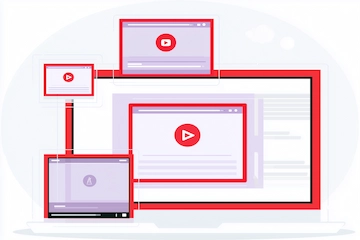

What you'll learn in this article
- The full map of the types of YouTube ad formats — in-stream (skippable and non-skippable), bumper, in-feed, Masthead, and Shorts — and the single job each one is actually good at
- The one distinction that reorganizes the whole list: interruptive formats you're pushed into vs. chosen formats you opt into, and why that changes the creative
- Which format is the least intrusive, and why "least intrusive" and "best performing" are not the same question
- The 2026 lineup as it actually stands — what's still live, what quietly retired, and which legacy names to stop putting in briefs
- How I decide which format to reach for by funnel stage, from a hub I keep coming back to across every YouTube account I run
Most guides to the YouTube ad formats read like a spec sheet: here's the length limit, here's the aspect ratio, next. That's never been the part that trips people up. What trips people up is that the format quietly decides what the campaign is capable of before you've written a word of copy. Pick the wrong one and no amount of budget or clever targeting rescues it — a six-second spot can't demonstrate a product, and a discovery placement can't force a message onto a cold audience.
I've run all of them on real accounts — Mastheads for brand launches, the workhorse skippable in-stream that pays the bills, bumpers to nag a warm audience into remembering a name. This page is the map I wish I'd had at the start: not just what each of the types of YouTube ad formats is, but what it's genuinely good at and where it lies to you. It's the hub for the whole YouTube advertising sub-cluster, so the detailed pages branch off from here.
One framing before the list, because it's the thing that made all the formats click for me: stop reading them as a menu of visual styles and start reading them as a menu of attention deals. Each format is a different bargain with the viewer over how much of their attention you're taking and whether they agreed to it.
The full map of YouTube ad formats
Here's the complete set, each with the one job I actually reach for it to do. I'm keeping this to what they're for rather than their specs — the numbers change, the purpose rarely does.
Skippable in-stream
The workhorse. Plays before, during, or after a video, skippable after five seconds. Because you're generally charged only when someone watches a meaningful chunk or interacts, it lets an uninterested viewer leave without costing you — which is why it carries most of my direct-response and mid-funnel spend. It's also the most forgiving home for longer creative, since the skip button does your qualifying for you.
Non-skippable in-stream
Same placement, no exit. Fifteen to sixty seconds depending on subtype, and the viewer watches all of it. You pay per impression, not per view, so this is a guaranteed-delivery format: use it when the message is short, the reach matters, and you genuinely need the whole thing seen. I treat it as a blunt instrument — powerful for awareness, wrong for anything that needs the viewer to have chosen to be there.
Bumper
Six seconds, non-skippable, impression-billed. Too short to explain anything, perfect for reinforcement. My most reliable use is frequency: someone's already seen the longer ad, and the bumper is the tap on the shoulder that keeps the name warm. One idea, one image, out. It's the format that punishes cramming the hardest.
In-feed
The chosen format. It appears as a thumbnail in YouTube search, alongside related videos, and on the mobile home feed, and it only plays when someone clicks it. That opt-in is the whole point — the audience is smaller but self-selected, which makes it the discovery play for people already researching your category rather than being interrupted mid-video.
Masthead
The billboard. A featured video autoplaying at the very top of the YouTube home feed, reservation-only through a Google sales rep, priced by impressions or by the hour. It's for a specific job: enormous reach in a short window, a launch or a sale event where you want to own the front door for a day. I've run it a handful of times and it does exactly what it says — you just can't buy it self-serve, and you can't optimize it like an auction campaign.
Shorts
The vertical native. Ads that slot between organic Shorts, skippable by a swipe, built for a mobile-first, high-scroll audience. It behaves less like a traditional ad and more like a piece of content that happens to be paid — which is both its strength and the reason lazy re-cuts of a landscape spot die there instantly. If you want the mechanics of how skippable ads actually charge and behave across placements, that's the deeper piece.
If you want the placement mechanics broken down further, the deeper piece on where in-stream ads sit as pre-roll, mid-roll, and post-roll is the natural next stop, since "in-stream" itself hides three different viewer contexts.
Interruptive vs. chosen: the split that reorganizes the whole list
Once you've seen the six, the useful move isn't to memorize them individually — it's to split them into two families, because that split predicts almost everything about how the creative should behave.
The interruptive formats — skippable in-stream, non-skippable, bumper, and to an extent Masthead — reach a viewer who did not ask for you. They were watching something else and you appeared. Your first job isn't persuasion, it's permission: a few seconds to earn the right to keep going before the skip instinct fires. Everything I know about hooks and front-loading comes from living inside these formats.
The chosen formats — in-feed above all, and Shorts in a softer way — reach a viewer who took an action to be there, or is at least primed to swipe past instantly if bored. The bargain is different: they've given you a sliver of intent, so the creative can afford to be a little slower and more substantive, but it has to reward the click or it's wasted. I've watched the exact same video succeed as an in-feed unit and flop as forced in-stream, purely because the audience's relationship to it was different.
This is why "which format is best" is a malformed question. Best at what, for whom, and did they agree to watch? Once you sort the types of YouTube ad formats into interruptive and chosen, the brief writes itself: interruptive needs a hook that survives being unwanted, chosen needs a payoff that justifies being picked.
Matching format to funnel stage, the way I actually do it
Here's the routing I run in my head before I open the campaign builder, because the format has to match the job the funnel stage is asking for.
For awareness, I lean on non-skippable in-stream and bumper — guaranteed delivery of a short message to a broad audience, with bumper stacking frequency once the longer ad has done the introducing. Masthead sits here too, but only for the rare moment when the budget and the occasion justify owning the home feed outright.
For consideration, skippable in-stream is my default: thirty to ninety seconds of room to demonstrate, prove, or compare, with the skip button filtering out everyone who was never going to care, so I'm not paying for indifference. In-feed rides alongside it, catching the active researchers already poking around the category.
For conversion and lower-funnel work, skippable in-stream with a direct CTA against warm and remarketing audiences does most of the lifting, and Shorts increasingly earns a place for the mobile-native crowd. The mistake I see constantly is a bumper campaign set to an awareness goal being asked to move pipeline — it structurally can't, and the report will show you exactly that if you're honest about the metric. If you're weighing the total investment across these choices, my breakdown of what YouTube ads cost across formats lays out how the billing model shifts what you're actually paying for.
Which YouTube ad format is the least intrusive?
People ask me this a lot, usually because they're worried about brand perception, and the honest answer is in-feed — because nothing plays until the viewer clicks. There's no forced impression, no interruption of something they were mid-way through; the ad waits to be chosen. Shorts is a close second in spirit, since a single swipe dismisses it and it's designed to feel continuous with the organic feed rather than crashing into it.
But here's what the question usually misses: least intrusive and best performing are different axes, and optimizing for the first can quietly sacrifice the second. In-feed's politeness is exactly why its volume is lower — you only reach people who already decided to look, which is wonderful for intent and terrible for scale. The interruptive formats are interruptive for a reason: they put you in front of people who'd never have clicked. I've had clients insist on "only the non-annoying formats" and then wonder why the campaign couldn't grow. Pick your intrusion level deliberately, matched to whether you're trying to be found or trying to be seen.
The 2026 lineup: what's live, and the legacy names to drop
The format map has been shifting under everyone's feet, and a fair amount of what's still circulating in old briefs simply doesn't name a live format anymore. So here's where things actually stand, and what to stop saying.
The core self-serve set you can build in the auction today is skippable in-stream, non-skippable in-stream, bumper, in-feed, and Shorts. Masthead remains, but reservation-only through a Google rep — not something you spin up yourself. That's the honest current lineup for the types of YouTube ad formats a typical advertiser will touch.
The names to retire: TrueView as a format label is largely legacy now — Google renamed the underlying metric to "TrueView views" in October 2025, and what used to be "TrueView Discovery" is just in-feed. Video Action Campaigns and the old Discovery ads have been folded into Demand Gen, which now carries the conversion and cross-surface job those used to do. And overlay ads and sponsored cards are gone entirely. If any of those appear in a template you're working from, treat the template as out of date.
The other shift worth internalizing is that formats increasingly don't map one-to-one onto campaigns. Automated types like Video reach, Video views, and Demand Gen assemble several formats at once and place them for you — closer to how I actually launch now: I choose the assets and the goal, the machine mixes the placements. It changes the question from "which format do I run" to "which formats do I feed it." For the canonical, always-current reference on every format's placement, billing, and campaign compatibility, Google's own about video ad formats reference is the page I check when a spec or a compatibility detail shifts, because the interface moves and that page tracks it.
The through-line across all of it: the YouTube ad formats aren't interchangeable creative styles, they're distinct bargains for attention. Learn what each one is honestly good at, sort them into interruptive and chosen, match the format to the funnel job — and the format stops being a box you tick and becomes the first real decision of the campaign.
FAQ: the types of YouTube ad formats
What are the main types of YouTube ad formats?
Which YouTube ad format is the least intrusive?
What's the difference between skippable and non-skippable in-stream?
Have the YouTube ad formats changed for 2026?
All articles
See all →Related articles
 Campaigns
YouTube Ad Formats: Pre-Roll, Mid-Roll, Post-Roll Decoded
Pre-roll, mid-roll, post-roll and overlay on YouTube: where the ad lands, how attention and completion shift, and when I pick skippable vs non-skippable.
 Campaigns
YouTube Masthead Ads: Homepage Reach, Specs, Cost & Booking
YouTube masthead ads explained end to end: where the unit runs, specs, youtube masthead ad cost and booking, and why I treat it as reach brand, not performance.
 Campaigns
YouTube Skippable Ads vs Non-Skippable: When to Use Each
YouTube skippable ads vs non skippable youtube ads by a practitioner: length, specs, cost, view rate and message control, plus how to build both.
 Campaigns
Did YouTube Remove Skippable Ads? What Actually Changed
Did YouTube remove skippable ads? A practitioner explains why some ads aren
 Campaigns
History of YouTube Ad Formats: How the Rules Shifted
The history of YouTube ad formats read for inference: why skippable, non-skippable and ad lengths changed, and what the YouTube ad formats evolution means today.
 Campaigns
In-Stream vs In-Feed YouTube Ads: Where, Cost, Funnel
In-stream ads youtube vs video discovery: where each serves, how you pay, and why confusing them wastes budget how I split them by funnel.