
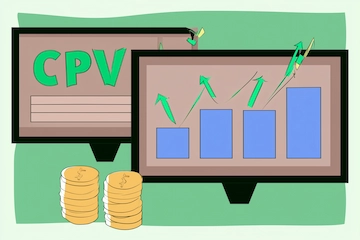

What you'll learn in this article
- What youtube masthead ads actually are — the top-of-homepage unit, bought not bid
- Exactly where the ad unit runs: desktop, mobile, TV screens, and tablet in the Home feed
- The specs that change how you brief creative, from the 16:9 video to the CTA and channel art
- The youtube masthead ad cost model — fixed CPM, upcharges, one country — and how to book it
- Why I treat the masthead as reach brand and never as a performance channel
The first time a client asked me to "just buy the YouTube homepage," I had to slow the conversation down — because youtube masthead ads aren't a bigger version of a normal video campaign, they're a different transaction. You don't bid, you reserve. You don't optimise toward a conversion, you buy a block of the most visible screen Google sells and put your brand on it. Getting that switch wrong is how brand money quietly turns into a disappointed performance report.
This is the end-to-end version, written from the way I plan and pitch the format rather than a spec glossary: what the masthead is, where the ad unit runs, the specs that matter, the youtube masthead ad cost and booking mechanics, and the inference behind every recommendation I make — this is a reach brand instrument, and the moment you judge it like a performance channel you've mis-set the campaign.
What YouTube masthead ads really are
YouTube masthead ads are the native, video-based ad format that runs at the very top of the YouTube Home feed across every device. Google is blunt about the positioning: this is the most prominent advertising placement it offers. When someone opens YouTube on their phone, laptop, or TV and your brand is the first thing autoplaying at the top of the feed, that's the masthead. It's a takeover, not a placement in a rotation.
The detail that reframes everything is how you buy it. Regular YouTube video sits in an auction. The masthead is reservation buying: you lock in a fixed volume of impressions, or a fixed block of hours, in advance — there's no auction deciding whether you win the slot. That's why I file it under brand and not under the auction-driven formats in the wider catalogue of YouTube ad formats — the buying model tells you what the format is for.
There are two flavours. The Cost-Per-thousand Impression (CPM) Masthead gives you a reserved, fixed volume of impressions across your campaign. The Cost-Per-Hour (CPH) Masthead is the true takeover: 100% share of voice of the masthead unit for the hours you reserve — every eligible person who opens YouTube in that window sees you, and only you. CPH is what brands buy for a launch day or tentpole moment; CPM is the more flexible everyday reach buy.
Where the ad unit actually runs
The masthead is one logical unit that renders differently on every surface, and knowing the surface behaviour stops you briefing creative that falls apart on the device where most of your impressions land.
On desktop, it autoplays without sound at the top of the Home feed for up to 30 seconds, and you control the exact start point and duration within that window, plus companion videos beside the main unit and channel art as the banner. On mobile, it's a video unit in the Home feed with headline, description, and call-to-action — and mobile is the only surface where the shoppable Product Feed variant renders, so if your key event is a catalogue moment, mobile is where it lives.
On TV screens it runs at the top of the living-room app feed, with a narrower metric set — impressions, clicks to video, video viewership, clicks to a channel — and there's a tablet rendering too. The principle: the masthead uses responsive formatting to serve the optimal version per device, which gives flexibility but means you can't hand-control every pixel per surface. I brief the video to work muted, land its point in the first few seconds, and read on a TV from across a room.
The masthead specs that matter
You don't need to memorise the full asset table, but a handful of specs genuinely change the brief, so these are the ones I keep in my head. Google's own asset guidance leans on the preview tool for exact text lengths, which tells you the smart move is to build in the official YouTube Masthead documentation preview tool and check each surface before you commit.
The video. It's a standard YouTube-hosted video, and it must be Public or Unlisted to be eligible to serve — a Private upload silently won't run, the most common avoidable mistake I see. Google recommends 16:9 at 1920 x 1080 or higher for optimal rendering across the responsive surfaces.
Headline, CTA, and destination. You get a headline across all devices, a call-to-action button on desktop and mobile, and a mandatory Final URL whenever you use that button. One rule catches teams out: every creative within a single masthead must use the same Final URL domain, so you can't split desktop and mobile to different brand sites. The optional click-tracking URL needs to be cache-busted and redirect back to the Final URL.
The desktop extras. Channel art and icon are pulled automatically from your channel, so finalise both a few days ahead — Google says at least 2 days for art and 2 to 3 for the icon — because a rushed change won't propagate in time. Companion videos need two unique video IDs; note that 360 videos and app install campaigns aren't supported, and Premieres have only limited support. Each one is a live failure mode I've watched delay a launch.
YouTube masthead ad cost and how to book it
Everyone wants a sticker price, and there isn't one — which is itself the most important fact about the youtube masthead ad cost. The masthead runs on a fixed CPM with upcharges layered on depending on the targeting you apply, and rates vary by market. That market dependency is exactly why you can only target one country per campaign: the price is set against that market. You see and confirm your real CPM in the quote session during campaign construction, not from a public rate card.
In practice a masthead is a committed brand spend, not a small test budget: reservation buying against the most prominent slot on YouTube, in a single market, with numbers that scale with the impression volume you reserve. When someone asks me for a figure I frame it the way I frame every YouTube advertising cost question — the CPM is only meaningful against the reserved volume and the market, so the quote session is the answer, not a number I can invent up front. One reassurance from the docs: on reservation campaigns including the masthead, you're only charged for impressions actually delivered, so over-delivery isn't billed to you.
Booking the reservation
The booking path has improved. CPM Masthead can now be reserved directly through Google Ads Reservation, via YouTube Programmatic Guaranteed in Display & Video 360, or through your Google representative — you no longer have to route every masthead through a rep. CPH Masthead, the 100% share-of-voice takeover, remains rep-only. Either way you're reserving inventory ahead of time, a cadence closer to buying a billboard than launching a search campaign: commit early, brief early, finalise channel assets days before the run.
Why I treat the masthead as reach brand, not a performance channel
This is the inference the whole article builds toward, and the advice I give before anyone reserves a euro. The masthead is a reach brand instrument, and everything about how Google built it points the same direction.
The buying model tells you. You reserve guaranteed impressions or share of voice; you don't bid toward a cost-per-action. A format that sells a fixed block of the homepage is selling reach and prominence, not efficiency. If the mechanism were performance, it would be an auction — and it isn't.
The reporting tells you. The standard metrics are impressions, co-viewed impressions, viewability, reach, and brand lift — the vocabulary of brand measurement. And the constraint that seals it: impression-based remarketing tags aren't accepted on the masthead, so you can't even build an impression audience off the unit. Structurally, Google is telling you this is a top-of-funnel awareness play.
So here's how I use it. I bring the masthead in for a launch, rebrand, or tentpole event — a moment where being unmissable to a whole country in one day is the point. Then I do the performance work downstream: I follow the takeover with auction-based video and conversion campaigns aimed at the interest it created, the split I draw in in-stream vs in-feed YouTube ads. The masthead makes the market aware in one stroke; turning that into action belongs to the cheaper, measurable formats behind it.
The trap I watch for: a client sees the CPM, converts it into an expected cost-per-lead, and judges the reservation on conversions it was never built to produce. My job is to reset the scorecard before the buy — agree up front that we're measuring reach, viewability, and lift, not CPA. Get that in writing and the masthead is one of the most powerful brand moments in the Google Ads toolkit; skip it, and even a flawless takeover reads as a failure on the wrong dashboard.
FAQ: YouTube masthead ads
What are YouTube masthead ads?
How much do YouTube masthead ads cost?
How do I book a YouTube masthead?
Are YouTube masthead ads performance or brand?
All articles
See all →Related articles
 Campaigns
YouTube Ad Formats: Pre-Roll, Mid-Roll, Post-Roll Decoded
Pre-roll, mid-roll, post-roll and overlay on YouTube: where the ad lands, how attention and completion shift, and when I pick skippable vs non-skippable.
 Campaigns
YouTube Skippable Ads vs Non-Skippable: When to Use Each
YouTube skippable ads vs non skippable youtube ads by a practitioner: length, specs, cost, view rate and message control, plus how to build both.
 Campaigns
Did YouTube Remove Skippable Ads? What Actually Changed
Did YouTube remove skippable ads? A practitioner explains why some ads aren
 Campaigns
History of YouTube Ad Formats: How the Rules Shifted
The history of YouTube ad formats read for inference: why skippable, non-skippable and ad lengths changed, and what the YouTube ad formats evolution means today.
 Campaigns
In-Stream vs In-Feed YouTube Ads: Where, Cost, Funnel
In-stream ads youtube vs video discovery: where each serves, how you pay, and why confusing them wastes budget how I split them by funnel.
 Campaigns
YouTube TrueView for Action Ads: Specs, CTAs, When to Use
YouTube TrueView for action ads explained: how CTAs and extensions turn views into action, the trueview for action youtube ad spec, and when I pick it over standard TrueView.