


What you'll learn in this article
- The one distinction that drives everything in YouTube bumper ads vs TrueView: forced 6 seconds versus a paid qualified view
- How the two billing models — CPM against CPV — change what you're actually buying and how you should judge each
- Why message control is the quiet deciding factor most people ignore when they weigh bumper vs TrueView on YouTube
- The reasoning I use to place each format by funnel stage, with the trade-offs I've hit running both on real budgets
- How I sequence bumpers and TrueView together so the two formats stop competing and start compounding
The question of YouTube bumper ads vs TrueView gets framed as a spec comparison, and that's exactly why so many media plans get it wrong. These aren't two versions of the same thing with a different runtime — they're two different transactions. With a bumper you're buying six forced seconds in front of a lot of people. With TrueView you're buying the attention of the people who chose not to skip. Once I started treating that as the real difference rather than "short ad versus long ad," picking between them stopped being a guess.
This piece is the reasoning, not just the table. I'll walk through the cost and control differences that actually matter, then the part I care most about: how I map each format to a funnel stage, where I've seen the wrong pick quietly burn budget, and how the two work together far better than either does alone.
Bumper vs TrueView on YouTube: the one difference that matters
Strip away the spec sheet and the split is simple. A bumper ad is six seconds or shorter, non-skippable, and the viewer has no exit — the ad plays, they watch, that's the deal. A TrueView ad (skippable in-stream) can be skipped after five seconds, so the viewer is handed a choice: stay or go. That single fork — can the viewer leave or not — is the whole comparison, and everything downstream flows from it.
Here's the inference I draw from that. Because a bumper can't be skipped, every impression is guaranteed but undifferentiated: you reach everyone equally, engaged or not. Because TrueView can be skipped, it filters for you — the viewer who sits through fifteen seconds of your ad has self-selected into caring, and that's a qualitatively better audience to have watched. Bumpers buy breadth. TrueView buys a filtered slice of intent. Neither is "better"; they answer different questions. If you want the format's own mechanics in isolation first, my full breakdown of how YouTube bumper ads work covers the six-second unit end to end, and the companion piece on TrueView ads does the same for skippable in-stream.
The mental model I keep: a bumper is a billboard you can't drive past; TrueView is a shop window people slow down for on their own. You can't make the billboard qualify anyone, and you can't guarantee the shop window gets seen — so the job you're hiring for decides which one you want.
Cost and message control: CPM against CPV
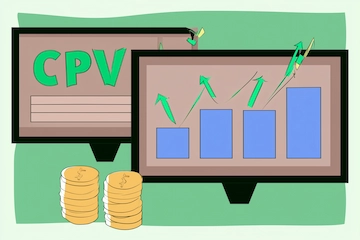
The billing models aren't a detail — they are the strategic difference expressed in money. Bumpers run on Target CPM, so you pay per thousand impressions regardless of whether anyone cared. TrueView (skippable in-stream) bills on CPV: you pay when a viewer watches 30 seconds, or the full video if it's shorter, or interacts — and skips cost you nothing. So a bumper charges you for exposure; TrueView charges you only for a qualified view. Google's own about video ad formats page is the reference I keep open to confirm how each unit serves and bills, since the naming shifts periodically.
That difference reframes "which is cheaper," a question I get constantly and which has no clean answer, because the two don't share a unit. Per impression, a bumper is one of the cheapest ways to buy reach on YouTube. Per engaged viewer, TrueView is usually the more efficient buy, because you aren't paying for the people who skipped. Comparing bumper CPM to TrueView CPV directly is comparing a per-person cost to a per-decision cost. If you want the full pricing landscape with both models side by side, I laid it out in the guide to what YouTube advertising costs.
The control trade-off nobody weighs
Cost gets all the attention, but message control is the factor I actually weigh harder. A bumper guarantees the whole message lands — all six seconds, no skip — but six seconds is all you get, so the message has to be a single idea. TrueView gives you as long as you want and room for a real call to action, but it can't guarantee anyone sees past second five, so your first five seconds have to earn the rest. Put plainly: the bumper guarantees a tiny message; TrueView risks a big one. That trade — guaranteed-but-short against complete-but-optional — is the axis I decide on far more often than raw cost.
How I place each format by funnel stage
This is where the reasoning pays off, so I'll be concrete about how I map bumper vs TrueView on YouTube to where a customer sits.
Top of funnel: bumpers do the reach
When the job is awareness at scale — a launch, a seasonal push, a brand I need front-of-mind before demand spikes — I reach for bumpers. The forced six seconds and the cheap CPM are exactly right for stamping one association across a huge audience repeatedly. I'm not asking anyone to act yet; I'm buying memory. Grading this stage on clicks is the classic mistake — it's a reach-and-frequency buy, and reach and frequency are the scoreboard.
Mid funnel: TrueView does the teaching
Once I need to explain something — a product's benefit, a differentiator, a story that takes more than one line — I switch to TrueView. The skippable format gives me the runtime to make a case, and CPV billing means I mostly pay for people who chose to hear it. The skip itself is useful data: a high skip rate on a mid-funnel ad tells me the hook or the audience is wrong, feedback a bumper can never give me because no one can skip it.
Lower funnel: TrueView, with the CTA doing work
Closer to the decision, TrueView keeps winning, because it has room for a genuine call to action and a click path, and because paying per engaged view aligns spend with intent. A bumper here is the wrong tool — six seconds with no room to act is a reminder, not a closer. The bidding choice that governs whether TrueView optimizes for views, action, or reach is its own lever; I walk through it in my rundown of video campaign bidding strategies, and it's the setting that decides whether the format actually serves the funnel stage you built it for.
Using bumper and TrueView together
The framing of one versus the other falls apart the moment you run a real campaign, because the strongest plans use both in sequence. The pattern that consistently works for me: TrueView to teach, bumpers to remind. I let the skippable ad carry the explanation and earn the engaged views, then follow the same audience with bumpers that re-stamp the single line I need remembered. The long form does the work; the six-second unit keeps it from fading.
Running it the other way can work too — bumpers first to build broad recognition, then TrueView to convert the warmed audience into people who'll sit through the full story. Either way, the point is that they're complementary instruments, not competitors. Once you stop asking "bumper or TrueView" and start asking "which does the reaching and which does the teaching," the plan gets a lot clearer.
How I actually decide: bumper or TrueView
When I'm choosing between the two, I run through the same short set of questions, and they almost always settle it faster than any cost comparison.
Is the message one idea or a story? One idea fits a bumper. Anything that needs explaining wants TrueView's runtime. If I can't say it in a single line, six seconds will mangle it.
Am I buying reach or attention? If I want a lot of people exposed regardless of interest, that's a bumper. If I want to pay only for people who chose to watch, that's TrueView. This is the CPM-versus-CPV question in plain language.
What stage is the customer at? Cold and top-funnel leans bumper. Warm, considering, or close to a decision leans TrueView, because that's where a full message and a CTA earn their keep.
Do I need clean feedback? If I want the audience to tell me whether the creative works, TrueView's skip rate is a live signal. A bumper gives me reach numbers but no read on whether people would have stayed — because they never had the choice.
Run those four and the answer usually names itself. And when two of them point in opposite directions — a broad audience but a message that needs explaining — that's my cue to use both in sequence rather than force one format to do a job it was never built for.
FAQ: YouTube bumper ads vs TrueView
What's the difference between YouTube bumper ads and TrueView?
Is TrueView cheaper than bumper ads?
Which is better for conversions?
Should I run bumper and TrueView together?
All articles
See all →Related articles
 Campaigns
YouTube Ad Formats: Pre-Roll, Mid-Roll, Post-Roll Decoded
Pre-roll, mid-roll, post-roll and overlay on YouTube: where the ad lands, how attention and completion shift, and when I pick skippable vs non-skippable.
 Campaigns
YouTube Masthead Ads: Homepage Reach, Specs, Cost & Booking
YouTube masthead ads explained end to end: where the unit runs, specs, youtube masthead ad cost and booking, and why I treat it as reach brand, not performance.
 Campaigns
YouTube Skippable Ads vs Non-Skippable: When to Use Each
YouTube skippable ads vs non skippable youtube ads by a practitioner: length, specs, cost, view rate and message control, plus how to build both.
 Campaigns
Did YouTube Remove Skippable Ads? What Actually Changed
Did YouTube remove skippable ads? A practitioner explains why some ads aren
 Campaigns
History of YouTube Ad Formats: How the Rules Shifted
The history of YouTube ad formats read for inference: why skippable, non-skippable and ad lengths changed, and what the YouTube ad formats evolution means today.
 Campaigns
In-Stream vs In-Feed YouTube Ads: Where, Cost, Funnel
In-stream ads youtube vs video discovery: where each serves, how you pay, and why confusing them wastes budget how I split them by funnel.