

What you'll learn in this article
- The one principle that decides every performance max campaign structure ecommerce choice I make: feed the algorithm enough conversion signal in one place before you split anything
- How I actually split by margin and by product category and, just as important, the cases where splitting quietly kills the account
- What I merge on purpose, because collapsing asset groups and campaigns is more often the right move than adding them
- Why the structure you choose on day one is really a bet about the learning phase, and how that bet decides whether the account scales or stalls
- The performance max account structure best practices I keep coming back to after enough rebuilds to know which ones survive contact with a real catalogue
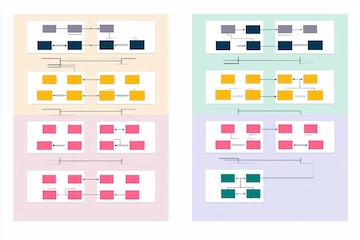
Almost every performance max campaign structure ecommerce problem I get handed is the same problem wearing a different outfit: someone split the account into too many pieces, each piece is starved of data, and the whole thing is stuck limping through learning it never finishes. So before any of the how-to, here is the thing I wish more people internalised in Performance Max, structure is not organisation, it is signal routing. Every campaign and every asset group you create is a separate bucket the algorithm has to fill with conversions before it optimises well. Split too early and you have ten half-empty buckets; keep it consolidated and you have one that fills.
It is how I decide what to separate and what to accumulate together in real accounts, why margin and category are the two axes that actually earn a split, and how those choices ripple straight into the learning phase. The way I structure pmax campaigns starts from the product feed and the landing pages the feed points at, because those two upstream things quietly constrain every downstream decision you make about groups and budgets. If you want the ground-level view of what this campaign type even is before we structure it, my piece on what Performance Max is and what it hands to automation is the backdrop I'm assuming throughout.
The principle behind every structure choice
The single rule I test every structural decision against: does this split give the algorithm more useful signal, or does it just divide the signal I already have? That question answers about eighty percent of performance max campaign structure ecommerce debates before they start. Google's own guidance is consistent here you group assets that should serve as a coherent theme, and it recommends separating asset groups by content category, theme, or target audience, as laid out in the official best practices for asset groups. But notice what that guidance does not say: it never tells you to split by margin, and it never tells you how many groups is too many. That is the practitioner's job, and it is where most accounts go wrong.
My read, after enough rebuilds to have a real opinion, is that a Performance Max campaign wants to be as consolidated as your goals allow. Conversion data is the fuel; fragmenting it across many asset groups and many campaigns is the most common self-inflicted wound I see. Coherence inside a group matters a single theme so the AI mixes on-theme creatives rather than mush but coherence is cheap to achieve. Signal density is expensive, and structure is how you spend it.
There is a second reason I default to consolidation that people underrate: the bidding strategy is set at the campaign level, so every asset group inside a campaign shares one target. That means a split only changes economics if it happens at the campaign boundary. It also means conversion rates across your categories get blended into a single optimisation problem, which is fine when the categories behave similarly and quietly destructive when they don't. Reading where those rates genuinely diverge is what tells me whether a category deserves its own campaign or should stay folded into one a judgement that leans on how you feed conversions back to the machine, which is why I treat structure and audience signals as one design problem, not two.
Two axes actually earn a split: category and margin
When I do separate, I separate along one of two axes, because these are the two that change what a "good" outcome even means. The first is product category or theme, which is the axis Google endorses and the one that keeps creatives coherent hiking gear and formalwear should not share an asset group, because the images, headlines and audience signals pull in opposite directions. The second axis is margin, and this one is entirely mine to manage because the platform is blind to it. A single campaign optimising to one blended target treats a 70%-margin product and a 15%-margin product as interchangeable if they convert at the same value, which is exactly how you end up profitably unprofitable. Splitting high-margin and low-margin ranges into separate campaigns lets me set different roas targets for each, and setting a stricter target roas on the thin-margin range is often the difference between an account that looks fine on ROAS and one that actually makes money.
What I separate and what I merge
Structure is a series of merge-or-split calls, and I make far more merge calls than people expect. Here is where I land on the common ones, and the reasoning is always the same signal-density question from above.
What I separate
I split at the campaign level when the products need genuinely different economics or different budgets that is the margin case, and occasionally a "hero range versus the long tail" case where a handful of bestsellers deserve their own budget rather than competing internally for it. The cleanest way I've found to carve those ranges out of a large catalogue is with custom labels in the feed, so a single google ads campaign can be pointed at exactly the margin band or the bestseller set I want without hand-picking products. Inside a campaign, I split into multiple asset groups when categories are creatively distinct enough that one set of images and headlines can't honestly represent them. Each group then needs its own coherent creative assets text images and videos that speak to that category rather than a generic pass because a thin group with weak assets drags the whole campaign's Ad Strength down. The listing group inside each asset group is then what points that group at the right slice of the feed, so the creative theme and the products actually match. If you want the mechanics of dividing the catalogue itself, my walkthrough of how I build product groups in Performance Max covers the feed-side of this decision in detail.
What I merge
Far more often, the fix is to collapse. Two thin categories that each see a trickle of conversions become one asset group that sees enough to matter. Three underfunded campaigns become one with a budget that clears the learning threshold. I merge whenever a split is buying me theoretical tidiness at the cost of real data and in a Performance Max campaign, data always wins that trade. The honest test is: if I can't point to a different target or a different budget that justifies the separation, the separation is decoration, and decoration is expensive here. This consolidation instinct is the same one that drives good performance max account structure best practices more broadly, and it pairs closely with how you organise the catalogue itself. Fewer, better-fed campaigns beat a sprawling map almost every time.
One merge I'm careful about is Search cannibalisation. Because Performance Max reaches across Search too, an over-split structure sitting next to your standard search campaigns can end up bidding against your own account. Keeping the PMax side consolidated makes that overlap far easier to reason about. I also lean on the search term insights to see which queries PMax is actually catching, and where it's absorbing traffic I'd rather keep in a dedicated Search campaign, I add negative keywords at the campaign level to push it back. Structure and steering have to be designed together: a clean map is worthless if the campaign is quietly cannibalising the very terms you built your Search account around.
Why structure decides the learning phase
This is the part that turns structure from a tidiness exercise into the thing that determines whether the account scales. Every campaign has to accumulate conversions before Smart Bidding stabilises, and that budget is spent per campaign, not pooled across your account. So the structure you choose on day one is really a wager about how fast each bucket fills.
The arithmetic is unforgiving. A widely cited practitioner rule of thumb is that a campaign wants to see something on the order of thirty conversions in its recent window to bid confidently, and each asset group ideally generates enough of its own signal to justify existing rather than diluting the pool. Those numbers are anecdotal Google doesn't publish them but the direction is right and it is the direction that matters. If you take a store doing sixty conversions a month and split it across four campaigns, you have just guaranteed that none of the four ever leaves learning. If you keep it as one, it clears the bar and starts optimising. Same account, same budget, completely different outcome decided entirely by structure.
This is why I start consolidated and split only once a campaign has earned it with volume. A campaign that is comfortably clearing its conversion threshold can afford to be divided; a campaign scraping along the bottom cannot, and splitting it is how good accounts stall. The pattern I watch for across the accounts I manage is simple: if performance goes flat and the campaign never seems to exit learning, the diagnosis is almost always too much structure for the available data, and the fix is to merge back down until the buckets fill again. Scaling, in this campaign type, usually looks like removing structure, not adding it.
The last piece is reading whether your structure is working, and that is a reporting discipline more than a setup one. I lean on the asset-group view to see which groups actually earn their keep, because a group that never accumulates meaningful signal is a candidate for merging regardless of how neat it looked on the plan. My note on interpreting the Performance Max asset report is where I keep the rules for that read the report is how you catch a structure that is too fragmented before it costs you a quarter of stalled learning.
The starting structure I default to
Because the right answer is always "it depends on your volume," it helps to have a default you deviate from rather than a blank canvas you agonise over. For a mid-sized store the shape I reach for first is deliberately boring: one campaign carrying the bulk of the catalogue, with two or three asset groups inside it split by the categories that are genuinely creatively distinct, and only if margins vary enough to matter a second campaign fenced off for the thin-margin range so it can run under its own stricter target. That is usually the whole map on day one. It looks almost too simple next to the elaborate diagrams people bring me, and that simplicity is the point: it concentrates signal instead of scattering it.
From there, deviation is earned, not assumed. I add a group or a campaign only when the data in front of me argues for it a category pulling enough volume to stand alone, a bestseller range worth ring-fencing, a set of landing pages whose conversion behaviour is different enough that blending it in would mislead the bidding. Each of those is a specific, defensible reason. What I refuse to do is build the sprawling version first and hope volume shows up to justify it.
The other half of the default is asset hygiene, because structure without populated groups is a hollow frame. Every group I keep gets the full complement Google asks for a spread of headlines, descriptions, several image ratios and at least one video so that no group is technically alive but practically starved. A tidy structure wrapped around half-empty asset groups underperforms a slightly messier structure where every group is genuinely fed, and I would take the second every time. When I audit an inherited account, thin assets and over-splitting almost always travel together, and fixing the two at once is what turns a flat account into one that finally moves.
None of this is exotic. The discipline is simply refusing to let neatness cost you data, and letting each split prove it deserves to exist before it goes in. Get that ordering right and the structure mostly takes care of itself.
FAQ on performance max campaign structure ecommerce
How many Performance Max campaigns should an ecommerce account run?
Should I split asset groups by product margin?
Why is my Performance Max campaign stuck in the learning phase?
What are the key performance max account structure best practices for ecommerce?
All articles
See all →Related articles
 Campaigns
PMax e-commerce: product feed structure guide
Performance Max e-commerce: how to structure the PMax product feed to maximise conversions. Attributes, titles, custom labels and advice from real Google Merchant Center account experience.
 Campaigns
PMax Asset Group: How to Structure Them for Maximum Reach (2026)
How to structure PMax asset groups to maximise reach: headlines, images, videos, audience signals, and practical advice on Performance Max Google Ads from real accounts.
 Campaigns
How to Create a Performance Max Campaign: My 14-Day Setup
How to create a performance max campaign from scratch: the exact 14-day sequence I follow, the minimum assets I load, and the setup errors I keep seeing.
 Campaigns
PMax Product Group Strategy: How I Segment the Catalog
My pmax product group strategy: how I segment the catalog so budget follows the products that convert, and the reasoning behind every listing group.