

What you'll learn in this article
- Why the manual-versus-automated Shopping question isn't settled, and why Google kept both alive
- What a google ads standard shopping campaign still gives you that Performance Max quietly took away
- The exact situations where manual control beats automation on my real accounts
- Where Performance Max genuinely wins, so you don't cling to manual out of habit
- How I run the two side by side to get scale and visibility at once
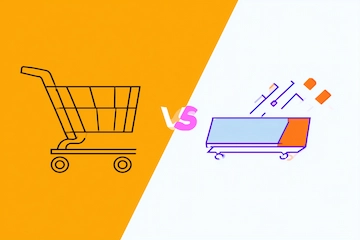
Every time I say I still run manual Shopping in 2026, someone tells me the debate is over. It isn't. The standard shopping vs performance max question is very much alive on my accounts, and the tell is simple: Google retired Smart Shopping in 2022 but left Standard Shopping in the product. It kept the manual campaign because the manual campaign still does things Performance Max can't. This article is the practitioner's case for why, when, and how manual control still wins.
I'm not writing this to be contrarian. On most e-commerce accounts I hand the bulk of the budget to Performance Max, and it earns it. But "PMax by default" and "PMax for everything" are different claims, and the second one costs people money. There's a real set of situations where a google ads standard shopping campaign is the smarter tool, and knowing which is which is most of the job.
What follows is inference from managing real spend across a dozen accounts, not a rewrite of the release notes. I'll cover what Standard Shopping still is, the specific control gap between the two, exactly when manual beats automation, where PMax genuinely wins, and how I structure both so they cooperate instead of fighting.
What a standard shopping campaign still is
Start with what you actually get. A Standard Shopping campaign takes your Merchant Center feed and shows product ads on the Shopping tab, Google Search next to results, and Google Images. There are no keywords, because Shopping runs on product data, but you keep the levers that matter: manual CPC bidding, product-group structure you control, the full Search terms report, and clean placement-level visibility. Nothing about it is hidden.
That last part is the whole point. Google's own reference describes how Shopping and Performance Max both draw on the same product feed but differ sharply in reach, bidding and reporting, and the manual campaign is the one that still exposes what's happening under the hood. If you want the authoritative side-by-side, Google documents it in its overview of how Performance Max campaigns differ from Shopping campaigns.
Crucially, Standard Shopping is not Smart Shopping. Smart Shopping was an automated black box that Google upgraded away; I covered that migration in detail in my write-up on smart Shopping vs Performance Max. Standard Shopping is the opposite: it survived precisely because it stays manual. Understanding that Shopping matches on product data rather than a positive keyword field starts with grasping how keywords behave differently in Shopping, since there's no keyword bid to set in either campaign type.
The control gap between the two
The honest framing of standard shopping vs performance max isn't "which is better" but "what are you trading." Performance Max buys you reach: ads become eligible across Search text, Display, YouTube, Gmail, Discover and Maps, all steered by fully automated bidding. Standard Shopping keeps you inside Shopping surfaces but hands you the controls PMax removes. You can't have both boxes ticked at once, and pretending otherwise is where accounts go wrong.
Three controls define the gap. First, bidding: Standard Shopping still offers Manual CPC alongside automated strategies, so I can set a hard price on a product group when I need to. Second, the Search terms report: Standard Shopping shows the full report, so I can see exactly which queries triggered which products and add negatives, while PMax gives only a thin search-terms insight view. Third, structure: I decide the product groups and their bids, rather than trusting the machine to allocate across surfaces I can't see. When I optimise a Shopping campaign, those three levers are the whole workshop.
There's also a priority quirk worth knowing. If a Standard Shopping and a Performance Max campaign in the same account are both eligible for a product, PMax serves ahead of it. So the control Standard Shopping offers only matters if you segment the catalog so the manual campaign actually gets to run. Left overlapping, it becomes a spectator.
When manual control actually beats PMax
Here's the practical core. In my experience, Standard Shopping wins in four recurring situations, and they all come down to visibility and control mattering more than raw reach.
Small, new, or low-volume accounts
When an account has thin conversion data, Performance Max struggles to exit the learning phase and spends erratically while it explores. A manual Standard Shopping campaign lets me start conservatively, read the Search terms report, and build clean data before automation has anything worth learning from. I treat it as the foundation, not the fallback.
Catalogs that need tight bidding
Some products carry very different margins, and I need to bid a hero SKU hard while starving a loss-leader. Manual CPC on granular product groups lets me express that; PMax averages it away. When margin control is the job, the manual campaign is the only tool that respects it.
When you need to see the search terms
If spend is leaking into irrelevant queries, I need the full report to diagnose it and add negatives. Standard Shopping gives me that report in full, which is why it doubles as a diagnostic layer even on accounts where PMax does the heavy lifting. It's the clearest window I have into what a feed is actually matching.
As a testing ground before scaling
Before I let Performance Max spread a budget across surfaces I can't inspect, I use Standard Shopping to learn what the feed can do on Shopping alone. That baseline tells me whether PMax's later "lift" is real incremental reach or just reshuffled Shopping demand. The distinction between manual and automated Shopping is the same one I unpack across my guide to how Google Shopping works as a channel.
When Performance Max genuinely wins
Being fair to automation matters, because clinging to manual out of habit costs just as much as over-trusting PMax. Performance Max wins whenever reach is the goal and you have enough conversion data to feed it. The extra inventory across YouTube, Discover and Display finds buyers Standard Shopping structurally cannot reach, and on mature accounts that incremental demand is real revenue, not just reshuffled clicks.
PMax also wins on effort at scale. Once an account has stable conversion volume and a clean feed, automated bidding across surfaces genuinely outperforms my manual tinkering, and it does so without me babysitting product-group bids daily. The audience signals and asset groups give it steering inputs Standard Shopping never had. By the time Smart Shopping became PMax, much of the control was already gone; Standard Shopping is what survived that shift precisely because it never handed those levers away.
The mistake isn't choosing PMax. It's choosing it before you've earned the data to trust it, or for products where you needed the visibility you just gave up. Reach without a baseline is a guess.
How I run both to get the best of each
On my larger accounts the answer to standard shopping vs performance max is "yes, both." Performance Max carries the scale, and a lean google ads standard shopping campaign runs alongside it as the control-and-visibility layer. The trick is keeping them from cannibalising each other, because PMax will win the priority contest every time they overlap.
The cleanest way I've found is to segment the catalog by product group. PMax takes the products where reach and automation pay off; Standard Shopping keeps a defined set where I want manual bids and the full Search terms report, and I use account-level negatives and brand exclusions so neither wanders where it shouldn't. That way the manual campaign actually serves instead of sitting behind PMax as a spectator.
If I compress the whole question into one line, it's this: Performance Max is the more capable campaign, but Standard Shopping is the more legible one. The job in 2026 isn't to pick a side, it's to use each where its trade-off is the one you want, and to keep a manual campaign running wherever seeing what's happening is worth more than reaching one more surface. That's the control worth protecting.
FAQ on standard shopping vs performance max
What is the difference between standard shopping vs performance max?
Can you still create a Standard Shopping campaign in 2026?
When is Standard Shopping better than Performance Max?
All articles
See all →Related articles
 Campaigns
Google Shopping Ads Bid Strategy: What Holds Up
Google shopping ads bid strategy in the learning phase: tROAS, Max Conversion Value or CPC? What actually holds up on real accounts, from experience.
 Campaigns
Google Shopping Campaign: My First 14 Days From Zero
Google shopping campaign from scratch: how to create a google shopping campaign and what I actually do, day by day, across the first 14 days.
 Campaigns
Smart Shopping vs Performance Max: What Changed
Smart shopping vs performance max: what actually changed in the upgrade, how do smart shopping campaigns work, and the control I lost along the way.