
What you'll learn in this article
- Why the three sit at different levels of automation and inventory, not on a single ranking
- Which inventory each one buys and where intent lives versus where discovery lives
- The one place they genuinely collide on Search, and how Ad Rank decides it
- The lane-by-lane allocation logic I apply to stop them cannibalizing each other
- How I run all three together on a mature account and measure each on its own job
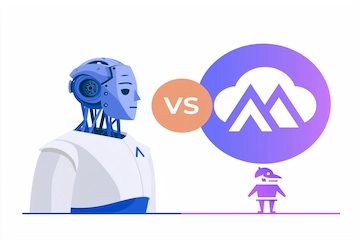
Whenever a client puts google ads ai max vs performance max vs demand gen in front of me as if it were a three-way race, I stop the conversation, because they are not competing for the same finish line. They sit at three different levels of automation and inventory: one supervises intent on Search, one chases conversions across every surface, and one builds demand on visual feeds. I do not pick a winner from a spec sheet. I reason from the account, figure out which job each campaign is doing, and then allocate so they stop pestandosi i piedi. This article lays out those three levels, the single place they genuinely collide, and the allocation logic I apply so the account gets controlled intent capture and real incremental reach at the same time.
Three different levels of automation
The category error is treating these as three flavors of the same thing. They are not. AI Max is not a campaign type; it is an optimization layer you toggle on inside a Search campaign, so it stays on the Search Network, keeps your keyword structure, and inherits your negatives and bidding. If you want the layer explained on its own terms, I keep a dedicated overview of what AI Max is that goes deeper than this comparison. Performance Max is a genuine standalone campaign that serves across Search, YouTube, Display, Gmail, Discover, and Maps at once, handing most targeting to the algorithm. Demand Gen is also standalone, but built for visual, interest-led discovery on YouTube, Discover, and Gmail, with no Search inventory at all.
So the automation dial climbs as the control drops. AI Max keeps you closest to the query: you expand reach with keywordless matching while still auditing and constraining it. Performance Max delegates placement and targeting for cross-channel scale. Demand Gen goes furthest from the query, because its whole job is to reach people before they search. Reading ai max vs performance max vs demand gen as one ladder is what trips people up; each rung answers a different question about how much you supervise and which inventory you buy.
Inventory and intent: where each one lives
Once you frame it by inventory, the allocation gets obvious. AI Max lives entirely on Search, working live queries, so it captures existing demand the moment someone types it and hands you query-level visibility and negatives to steer it. That makes it the natural upgrade path for Search-heavy setups, which connects to how I think about the broader controls I keep on for AI Max Search campaigns. Performance Max spans everything, so it captures intent on Search and discovery on visual surfaces in a single campaign, at the cost of granular control.
Demand Gen is the odd one out on purpose. It never touches Search; it serves image and video creatives to interest-based and lookalike audiences on YouTube, Discover, and Gmail, so it creates or nudges demand before the query exists. That is exactly why ai max vs demand gen google ads is best held as intent versus discovery: AI Max captures demand that is already there, Demand Gen manufactures it upstream. They almost never fight over the same impression because they buy different inventory, and that single fact drives most of my allocation.
Where they actually clash
The one dangerous overlap is on the Search Network, between AI Max and Performance Max. Both can be eligible on the same query, and Google does not split the traffic politely, it resolves the collision by Ad Rank. Per Google's own FAQ on how AI Max interacts with Performance Max, if a query is eligible in both, the candidate with the higher Ad Rank serves, exactly like the existing interaction between broad match and Performance Max. That is the seam where branded and high-intent searches quietly leak out of a controlled Search campaign into a broad Performance Max one.
Demand Gen mostly sits outside this fight because it has no Search inventory, so it cannot steal an intent query. Where it can collide is with Performance Max on YouTube, Discover, and Gmail placements, and there the risk is different in kind: not stolen intent but duplicated visual reach and inflated frequency against the same user. So I reason about two separate seams, an intent seam between AI Max and Performance Max on Search, and a reach seam between Performance Max and Demand Gen on visual inventory. Naming and structure make the first one easy to get wrong, which is the same trap I unpack in the head-to-head AI Max versus Performance Max comparison.
The allocation logic I apply
My rule is simple: assign each campaign a lane by the job it does, not by the reach it can theoretically grab. AI Max owns the high-intent Search queries with full visibility and disciplined negative-keyword hygiene, because that is where seeing and acting on the query pays off. Performance Max carries cross-channel conversion volume, usually anchored on a product feed, with brand exclusions switched on so it stops eating branded search that belongs to the AI Max campaign. Demand Gen owns upper-funnel discovery on visual surfaces, and I measure it on assisted conversions and new-customer reach rather than last-click ROAS, because judging a demand-building campaign on bottom-funnel metrics guarantees you kill the thing that was working.
Notice this is an inference from account shape and funnel role, not a fixed ranking of the three products. A B2B lead-gen account leans hard on AI Max and uses Demand Gen sparingly; a fashion e-commerce account leans on Performance Max with the feed and runs Demand Gen aggressively for discovery. The allocation follows the intent signals and the control needs, which is why two accounts can reach opposite conclusions from the same three-way comparison. If you want the two-standalone view in the same family, my Demand Gen versus Performance Max breakdown covers where those two split without AI Max in the picture.
Running all three without cannibalization
On a mature account the answer is usually all three, with a clear division of labor rather than a winner. AI Max holds the intent traffic on Search, Performance Max scales conversions across channels, and Demand Gen builds top-of-funnel awareness on YouTube, Discover, and Gmail. The two automated campaigns are the ones that cause trouble when they collide, so the operational work is guarding both seams: set brand exclusions in Performance Max so it stops eating branded search, keep negative-keyword hygiene tight in the AI Max campaign, and watch placement and frequency overlap where Performance Max and Demand Gen share visual inventory.
Bidding follows the same lane logic. All three depend on conversion-based signals, so I run AI Max on Maximize Conversions or Maximize Conversion Value, the same family Performance Max requires, because search-term matching does not work under manual CPC. Demand Gen gets whatever objective matches its job, conversion bidding when it is carrying volume, a reach or click objective when it is purely seeding the funnel. Get the lanes and the bidding right and the three stop competing for the same impression and start compounding, which is the entire point of reasoning through the allocation instead of picking a side.